Every new year introduces fresh design trends. Scandinavian minimalism, Japandi, or farmhouse chic all take their turns. But bohemian style, or boho decor , as we love to call it, seems to never fully leave. The question is, does boho still belong in 2025, or has it become outdated. The short answer: No, boho isn’t going anywhere. It’s simply evolving. Today’s boho homes feel more curated, balanced, and modern while still celebrating that carefree, soulful aesthetic that made the style so beloved in the first place. Let’s explore why boho remains timeless, what defines the look, and how you can bring it into your own home.
Why is it Called Boho?
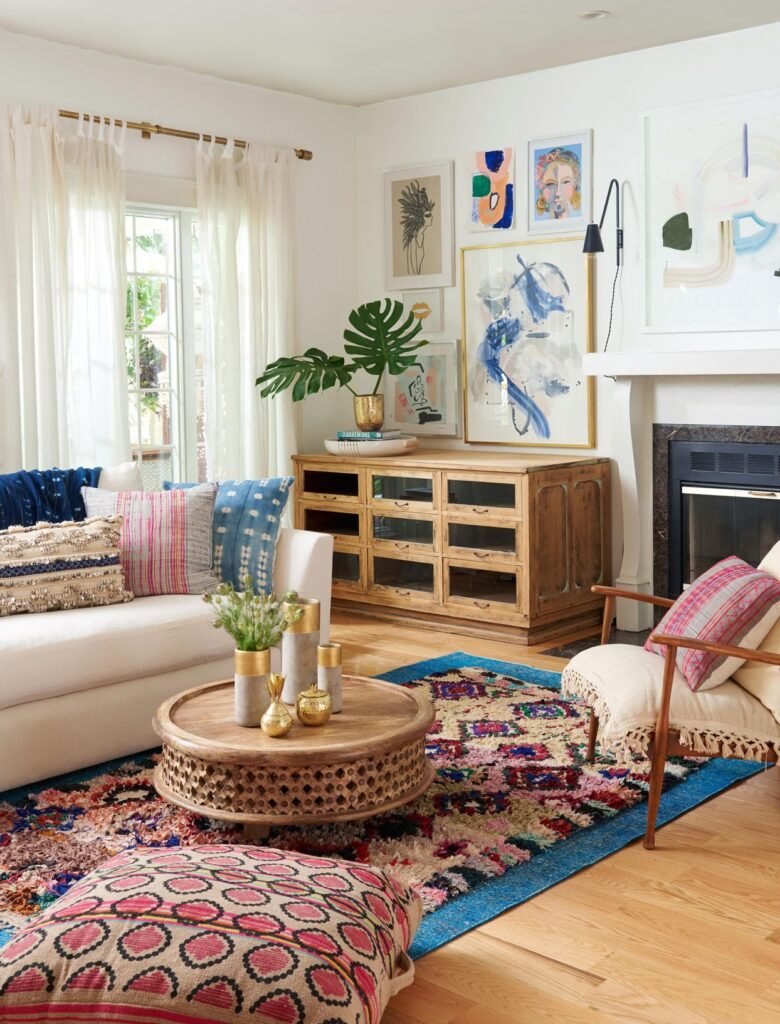
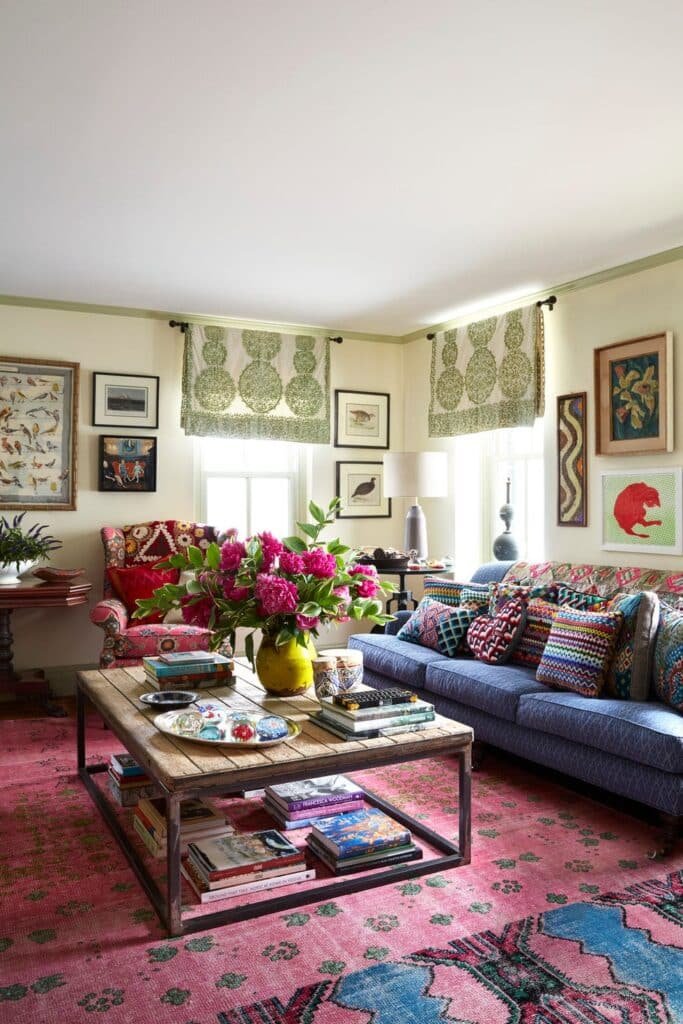
The term boho is short for bohemian, a word that first gained popularity in 19th-century France. At the time, it was used to describe artists, writers, and free-spirited thinkers who lived unconventional lives, often outside the norms of society. This spirit eventually translated into art, fashion, and home decor. By the 1960s and 70s, during the hippie movement, bohemian aesthetics resurfaced with a focus on travel, handmade crafts, and global influences, think Moroccan lanterns, Indian Kilim rugs, or embroidered textiles. Today, when we say boho decor, we’re referring to interiors that reflect that same ethos: free-spirited, eclectic, layered with meaning, and unafraid to mix cultures, textures, and eras.
What is Boho Style Home Decor?
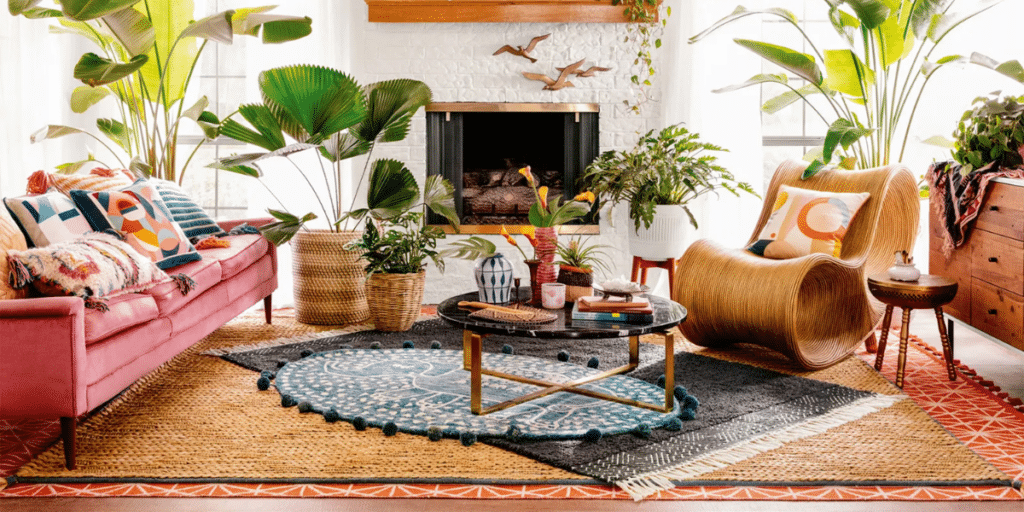
Boho style home decor is all about freedom, individuality, and warmth. At its core, it’s an eclectic mix of textures, colors, and cultures that come together to create a space that feels deeply personal and effortlessly lived-in. A bohemian home tells a story. You might find a boho rug anchoring the living room, handwoven baskets on the wall, a rattan chair by the window, and shelves filled with books, ceramics, and travel mementos. Plants spill from hanging pots, soft textiles are draped over furniture, and lighting is warm and ambient. The goal isn’t to match, it’s to mix and layer until the space reflects your soul.
What Colors Go With Boho?
Boho interiors are rooted in earthy, warm color palettes that evoke a natural, grounded feel. Think soft neutrals like creamy whites, sandy beige, and warm taupe as your base, layered with richer tones like terracotta, clay, olive green, and burnt orange. But boho also welcomes vibrant accents, often pulled from global textiles and artisanal pieces. Jewel tones like deep turquoise, mustard yellow, fuchsia, or indigo are common in Kilim rugs, pillows, and throws, adding depth and personality. The beauty of boho is in the contrast, calm, neutral foundations with bold, expressive highlights that tell a story.
What Is Minimalist Boho Style?
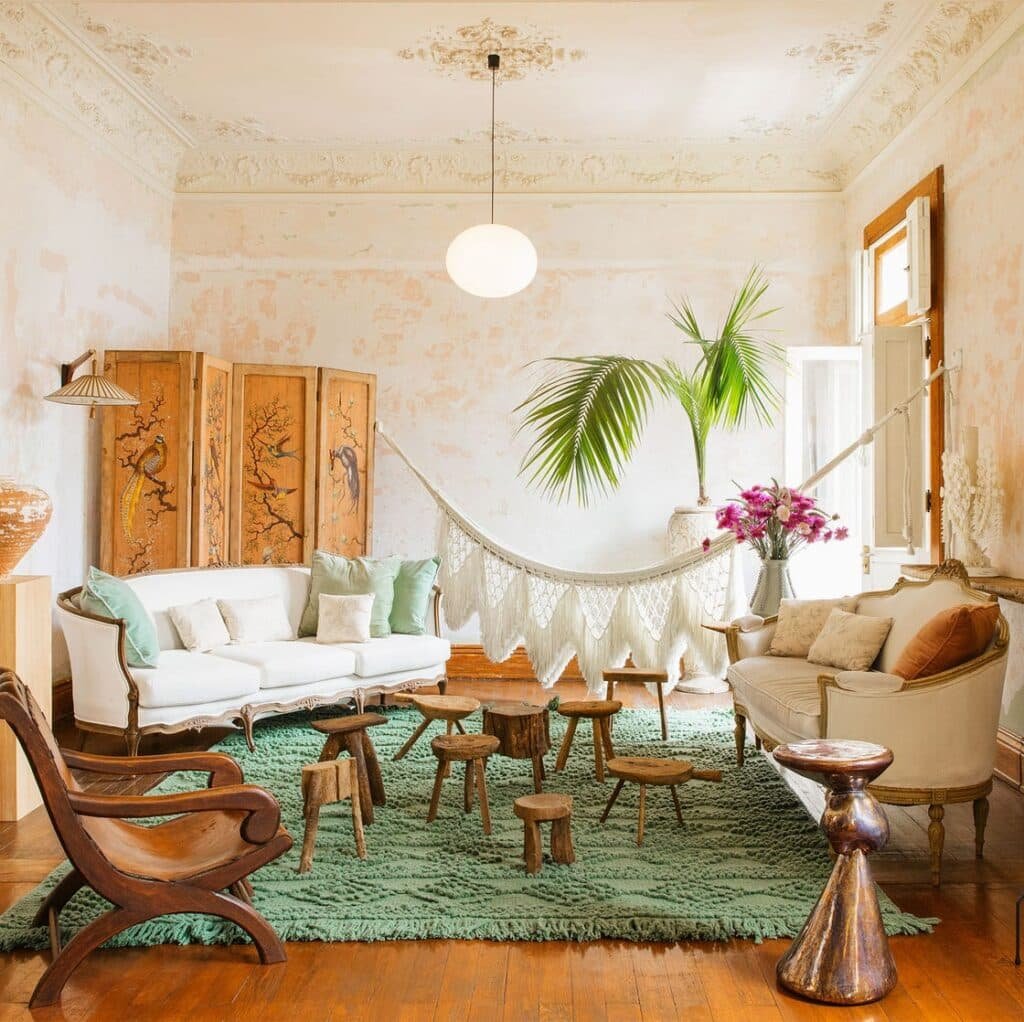
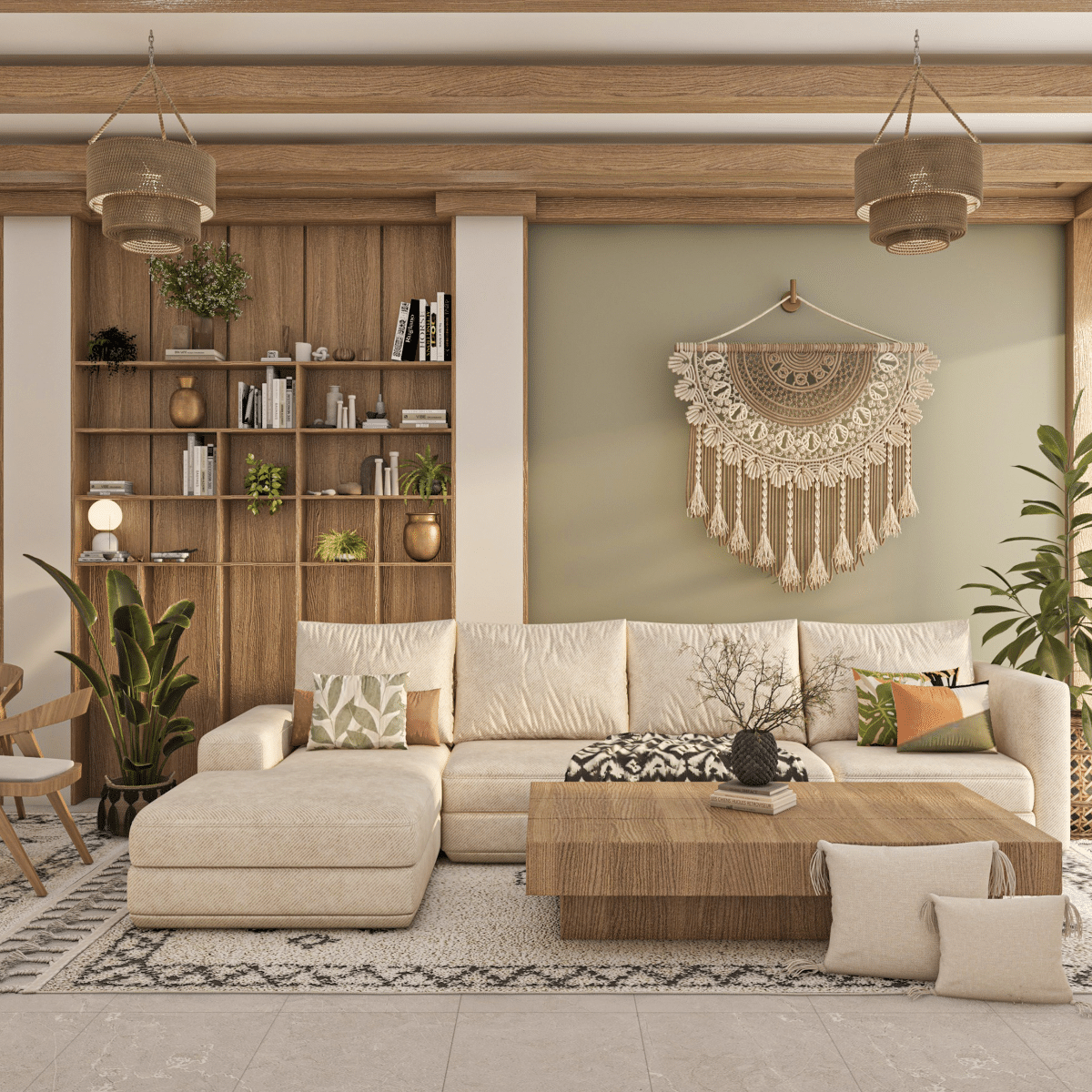
Minimalist boho style is a quieter, more pared-back version of traditional bohemian decor. It keeps the relaxed, earthy spirit of boho but strips away the excess, focusing instead on simplicity, softness, and space to breathe. The palette is typically neutral, think off-white, beige, sand, and muted browns, while texture takes center stage through linen, jute, raw wood, and handmade ceramics .The overall feel is airy, grounded, and effortlessly cozy.
What are the Elements of Boho Decor?
Boho decor isn’t about following a formula, it’s about layering textures, stories, and soul. Here’s a breakdown of the essential ingredients that make a space feel beautifully bohemian:
- Layered Textures: Texture is the heartbeat of boho design. Instead of relying on bold color alone, boho spaces bring interest through woven throws, tassels, fringe, macramé, embroidered cushions, rattan furniture, and textured rugs.
- Natural Materials: Bohemian interiors celebrate a connection to nature, and that comes through in the materials. Think raw wood, bamboo, jute, cane, clay, rattan, and linen. These organic finishes soften the space and add an earthy authenticity.
- Plants, Plants, and More Plants: Boho homes thrive on life, and nothing brings more of it than greenery. From hanging plants in macramé holders to potted fiddle-leaf figs and clusters of cacti, plants are essential to the bohemian atmosphere.
- Eclectic Patterns and Global Prints: Boho decor borrows inspiration from cultures around the world. You’ll see Persian-style rugs, Moroccan tiles, Indian block-printed textiles, and African mud cloth.
- Handcrafted and Vintage Pieces: Boho style embraces imperfection and uniqueness, which is why handmade and vintage items are so central. Whether it’s a handmade ceramic vase, a woven wall hanging, or a flea market mirror with patina, these pieces bring depth and authenticity.
- Low, Comfortable Seating: Boho living spaces often include relaxed seating that invites you to lounge. Floor cushions, poufs, and daybeds with soft throws and layered pillows create a casual, inviting environment.
What Are the Five Types of Bohemian Style?
Boho style comes in different forms, each with its own personality and vibe. Here are five popular types of bohemian decor:
- Classic Boho: Colorful, layered, and full of global influence. This style mixes patterns, vintage finds, and natural textures for a lived-in, artistic feel.
- Modern Boho: Combines bohemian warmth with clean, contemporary lines. Neutral tones, sleek furniture, and subtle eclectic accents define this look.
- Minimalist Boho: A pared-back version with soft neutrals, light woods, and simple textures. It feels calm, airy, and uncluttered while staying cozy and organic.
- Boho Chic: A more refined take on boho, blending natural textures with elegant touches like velvet, brass, or soft glam lighting.
- Rustic Boho: Earthy and grounded, this style mixes boho details with farmhouse or cabin aesthetics, think wood beams, jute rugs, and cozy layers.
How Can I Make My House Look Bohemian?
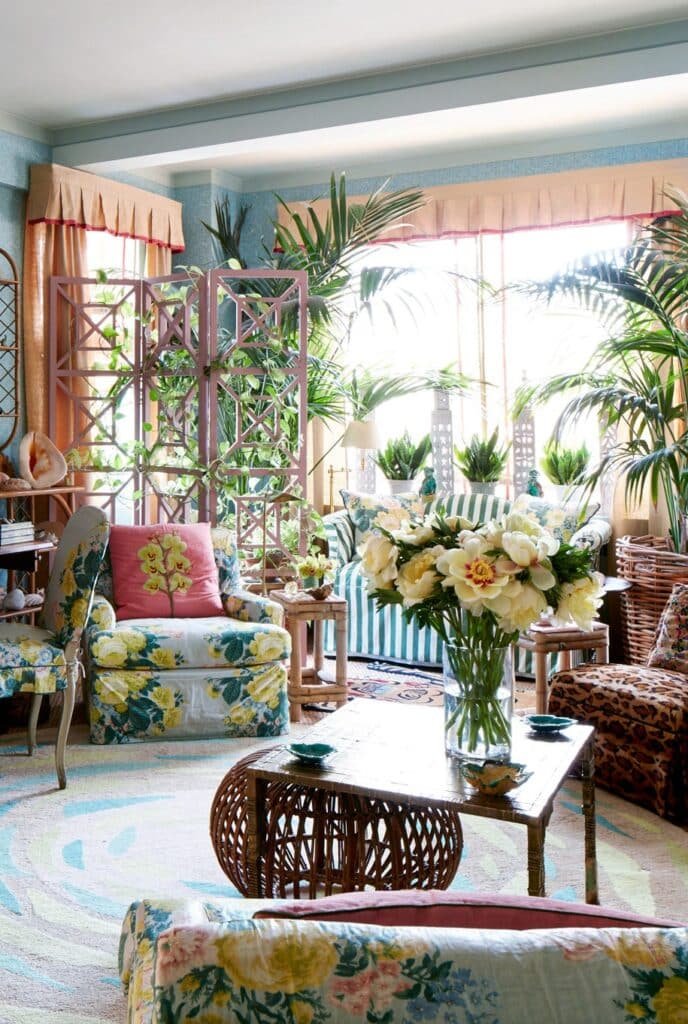
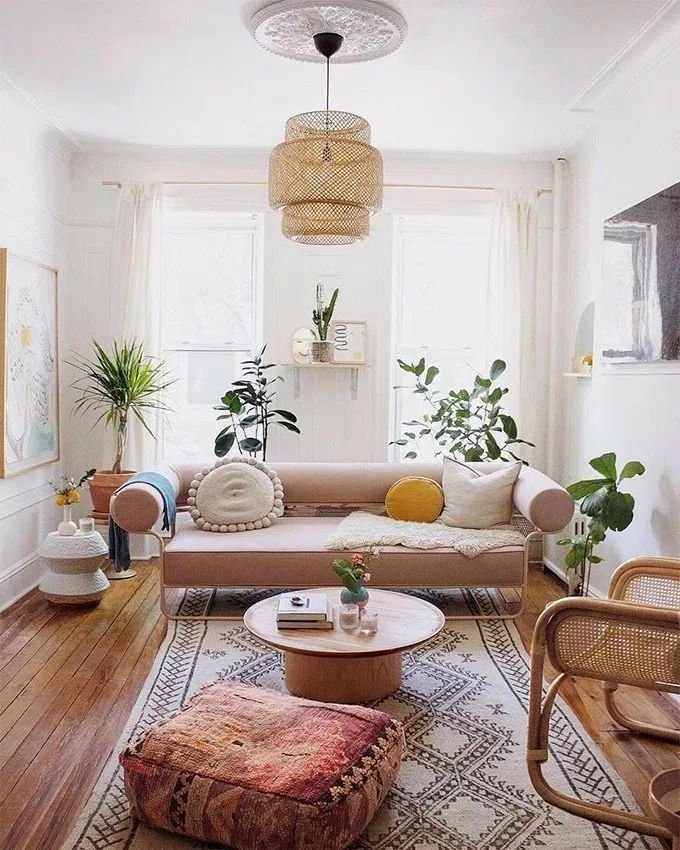
Creating a bohemian-inspired home is about layering textures, embracing imperfection, and letting your personality shine through. Here are some thoughtful ways to bring that laid-back, eclectic energy into your space:
- Start with a Statement Rug : A boho rug is a perfect starting point, its flat weave, rich patterns, and earthy colors bring authenticity and depth to the floor. Whether placed under a low coffee table or layered over wood or concrete, a boho rug adds that instantly recognizable boho flair and creates a cozy, grounded atmosphere.
- Layer Textiles for Comfort and Depth: Boho homes thrive on texture, and textiles are key. Mix cushions in different fabrics, drape throws over chairs and sofas, and hang lightweight, flowy curtains.
- Incorporate Natural Materials: Choose pieces made from wood, rattan, jute, linen, or clay to bring an earthy and grounded feel. These materials add authenticity and warmth, making your home feel more connected to nature.
- Add Plenty of Greenery: Plants are a must in bohemian spaces. They bring life and softness to every corner, whether they’re trailing from shelves, perched on windowsills, or standing tall in woven baskets.
- Play with Color and Pattern: Use earthy tones like terracotta, ochre, olive, and rust as your base, then layer in patterns through textiles and accessories. You don’t need everything to match, boho style embraces contrast and surprise. The mix is what makes it feel organic and expressive.
- Mix Vintage with Modern: Combining old and new adds soul and character to your home. Pair a modern sofa with a vintage wooden cabinet, or style a sleek dining table with mismatched antique chairs.
- Use Warm, Ambient Lighting: Harsh lighting can kill the vibe, opt instead for soft, layered light sources. Floor lamps, lanterns, candles, and string lights all add a warm glow and create a cozy atmosphere.
- Create Relaxed and Cozy Spaces: A boho home invites you to slow down. Create a nook with a floor cushion, pouf, or rattan chair and a small side table with a candle and book. These little corners of comfort make your space feel more lived-in, layered, and emotionally grounding.
How Do I Make My Room Boho?
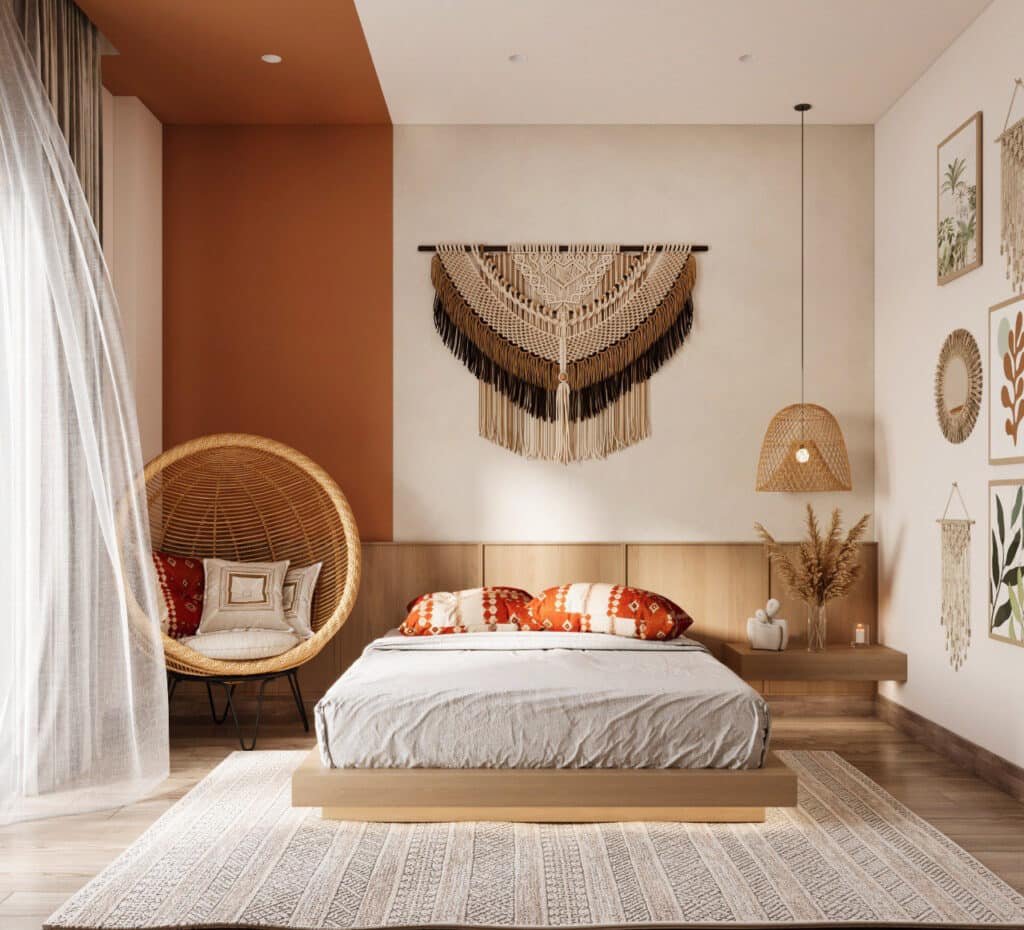
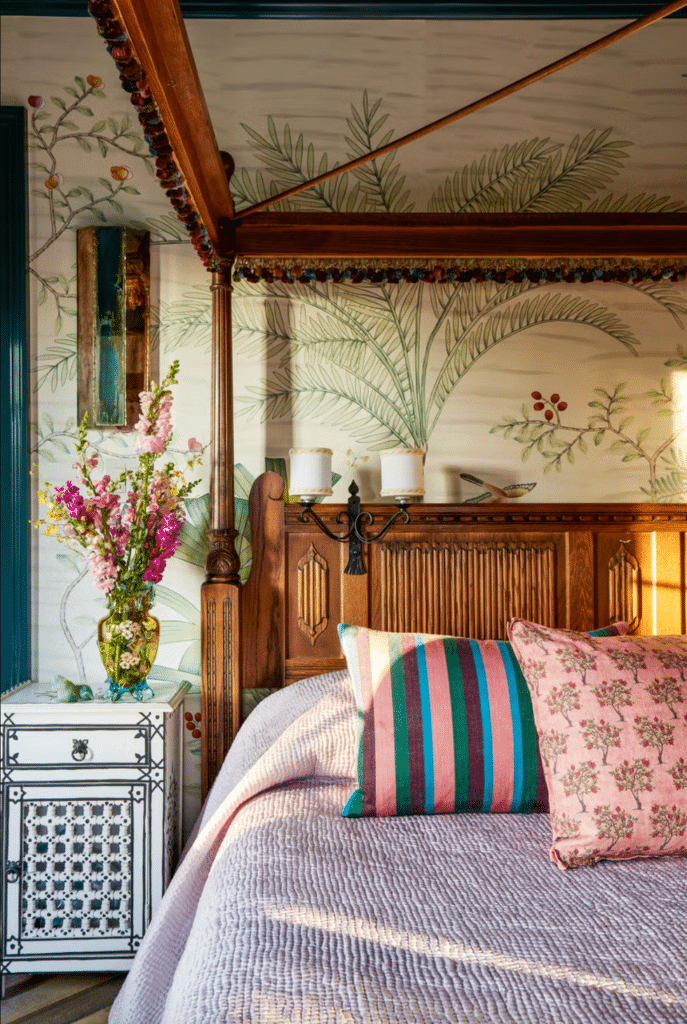
- Start with One Focal Piece: Begin by choosing a key item that sets the tone, this could be a juterug, a rattan headboard, or a vintage wooden cabinet. Let this piece guide your color scheme and material choices, then build the rest of the room around it.
- Layer Pillows, Throws, and Textiles: Add softness through textiles. Layer throw blankets over chairs or beds, stack cushions in different patterns and fabrics, and mix textures like cotton, wool, and linen.
- Add a Few Well-Placed Plants: Even just one or two plants can breathe life into a room. Place a leafy plant near the window or a hanging vine in a macramé holder. Greenery introduces a natural element that pairs beautifully with earthy tones and handmade decor.
- Style Your Corners: Don’t leave the edges of the room empty. Use a pouf, floor cushion, or small stool to create a quiet nook. Add a throw, a basket, or a small plant nearby to turn it into a cozy retreat for reading, journaling, or sipping tea.
- Use Soft, Warm Lighting: Swap bright overhead lights for floor lamps, bedside lamps, or fairy lights. Warm, diffused lighting creates an inviting and restful atmosphere, perfect for a bedroom or living space where you want to relax and unwind.
- Incorporate Natural and Handmade Touches: Use a jute rug, clay vase, woven basket, or carved wooden accents to bring in organic warmth. Handcrafted details make the room feel more personal and grounded without overwhelming the space
Wrap Up
Boho decor continues to be not just relevant, but deeply loved in 2025. It’s a style that adapts beautifully, whether through earthy minimalism, bold layering, or modern blends, while still holding on to its soulful, expressive roots. From the rich history of bohemian living to the way a single Kilim rug or cozy reading corner can transform a space, boho style proves it’s far more than a passing trend. Whether you’re drawn to classic patterns, natural textures, or personal collections, boho gives you the space to design without rules and decorate with heart.