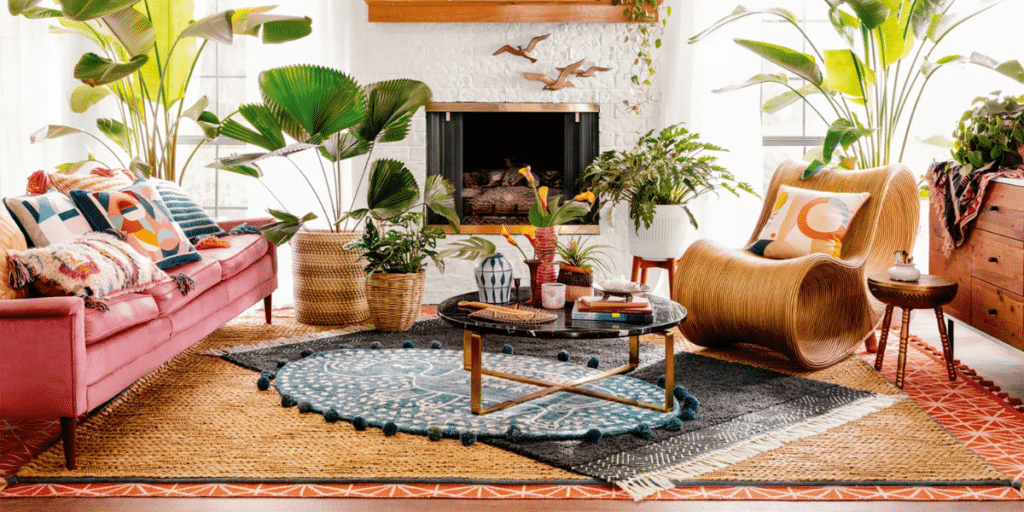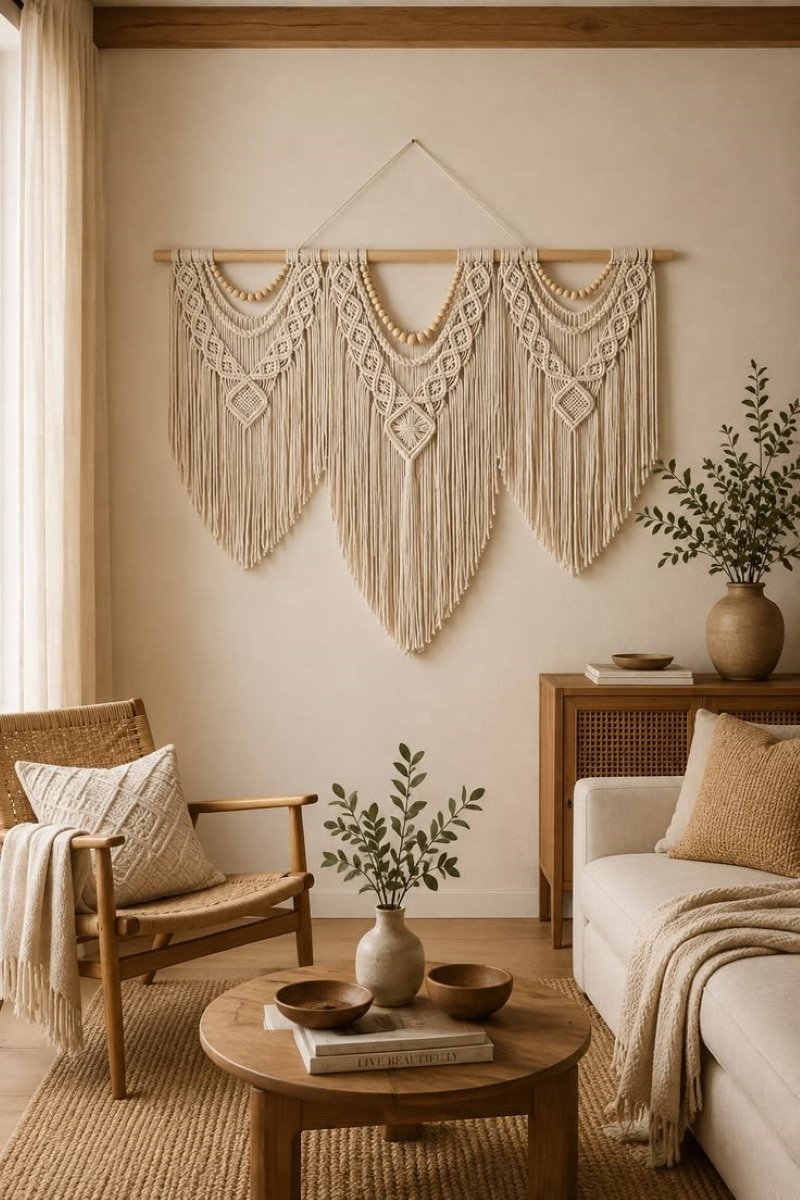
Macrame and tapestry wall hangings are popular ways to add texture, colour, and personality to an empty wall. Although they are often used interchangeably in home decor, they are made using different techniques and create distinct visual effects. The main difference between macrame and tapestry wall hangings is their construction: macrame uses decorative knots to create textured patterns, while traditional tapestries are woven using interlaced threads. Macrame typically has an open, three-dimensional appearance, whereas tapestries offer a fabric surface with woven or printed designs. Understanding their materials, textures, hanging methods, and styles can help you choose the right decorative piece for your home.
What Is a Macrame Wall Hanging?
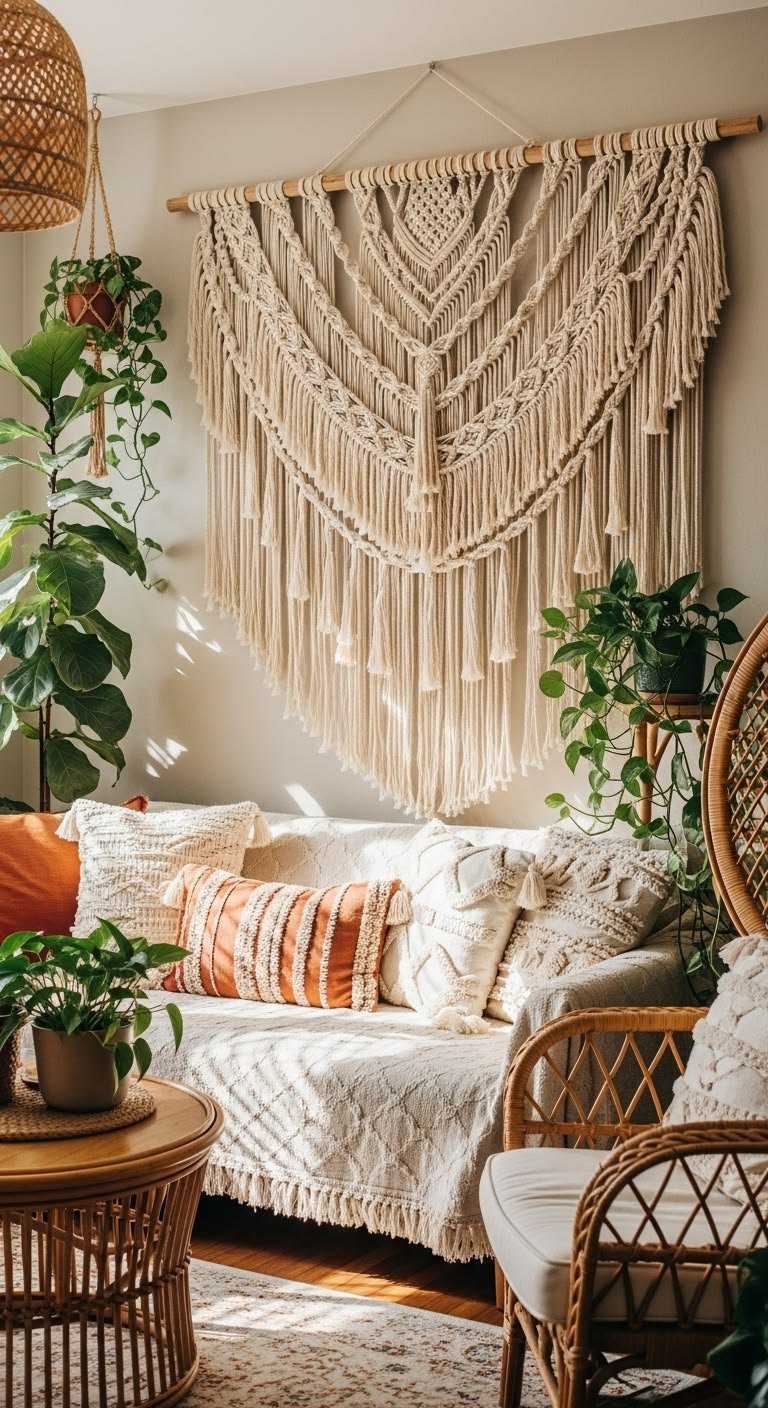
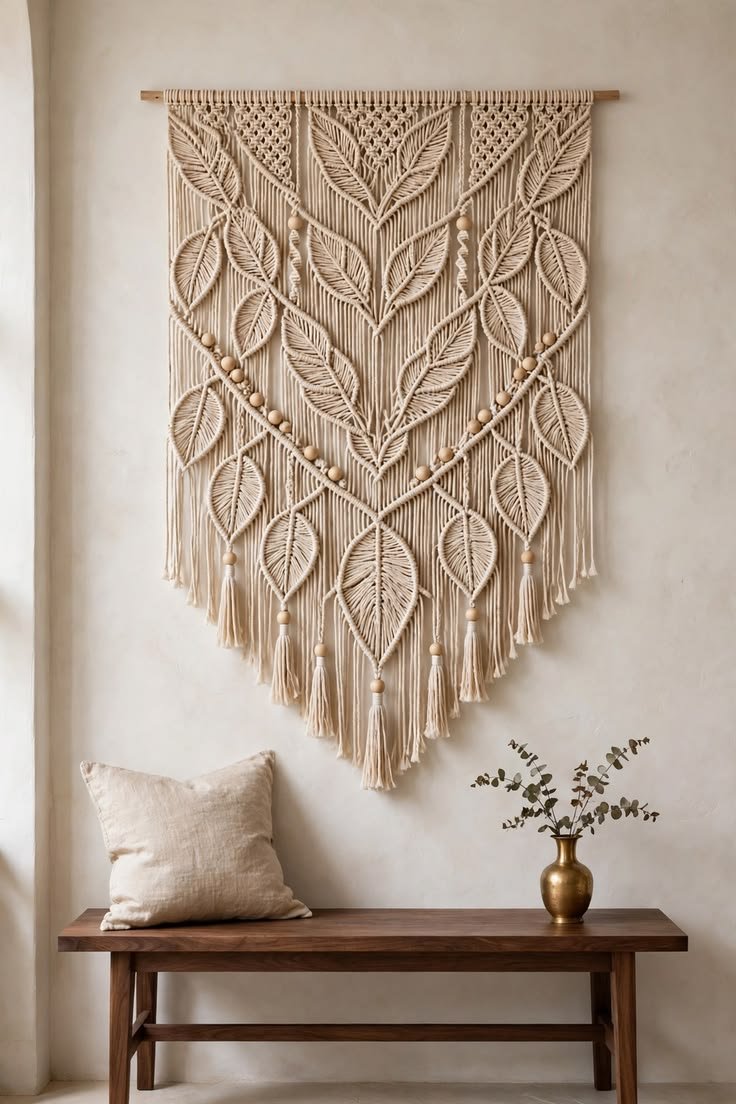
A macrame wall hanging is a decorative textile made by tying cords into different knots to create patterns, shapes, and textured designs. Unlike woven fabrics, macrame relies on knotting techniques such as square knots, half-hitch knots, and spiral knots to form its structure. Macrame wall hangings often feature geometric patterns, fringes, tassels, and layered cords. Their handmade appearance makes them particularly popular in bohemian, rustic, minimalist, and Scandinavian interiors.
For example, the Boho macrame wall tapestry features a handmade cotton design with geometric detailing that adds texture to a living room or bedroom. Although the product is described as a wall tapestry, its macrame construction distinguishes it from a traditionally woven tapestry.
What Materials Are Used for Macrame Wall Hangings?
Macrame wall hangings are commonly made from cotton cord, jute, linen, and synthetic fibres such as polyester. Cotton is particularly popular because it is soft, flexible, and easy to knot into intricate designs. Jute creates a coarser, earthy appearance, making it suitable for rustic and natural-inspired interiors. Linen offers a lighter texture, while polyester and other synthetic fibres can provide alternative finishes and different levels of durability.
The thickness of the cord also affects the finished design. Thick cords create bold knots and prominent textures, whereas thinner cords allow more intricate patterns. Many macrame pieces also incorporate wooden dowels, metal rings, or natural branches for hanging.
How Do You Hang a Macrame Wall Hanging?
You can hang a macrame wall hanging using a sturdy wall hook, nail, or wooden dowel, depending on its size and weight. Proper placement and secure installation help keep the design balanced and attractive.
Follow these simple steps:
- Choose the Right Location: Select a wall with enough space to display the entire macrame design, including its fringes. Above a sofa, bed, or console table is often a good choice.
- Measure the Hanging Height: Leave approximately 6–10 inches between the bottom of the macrame and the furniture beneath it. Adjust the spacing according to the design’s length.
- Select Suitable Hanging Hardware: Use a sturdy hook, screw, or wall anchor appropriate for the hanging’s weight and your wall type.
- Secure the Macrame Hanging: Attach its wooden dowel, rod, or hanging cord to the hook. Larger pieces may require two mounting points for stability.
- Adjust the Design: Straighten the cords, arrange the fringes, and check that the hanging sits evenly against the wall.
What Is a Tapestry Wall Hanging Called?
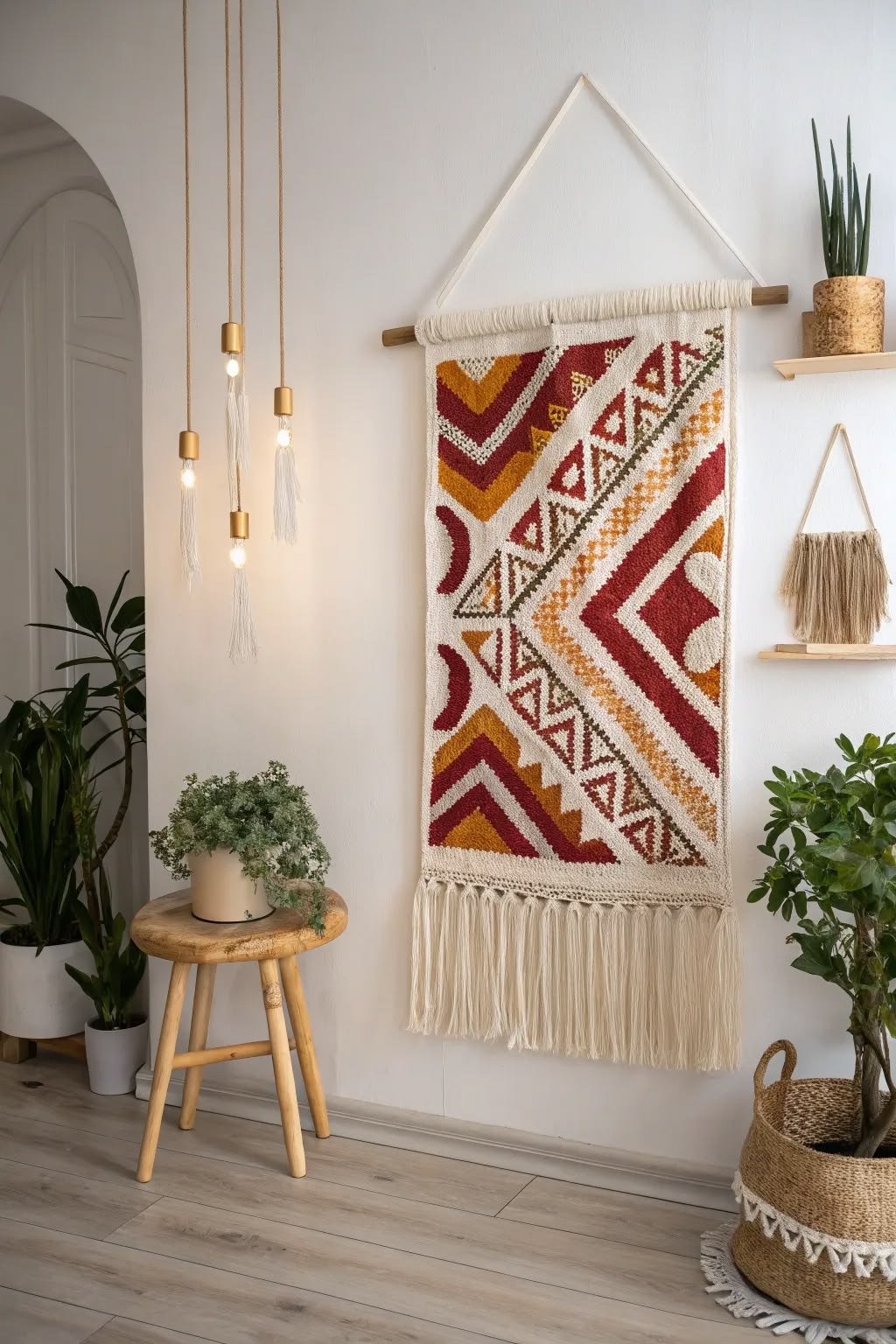
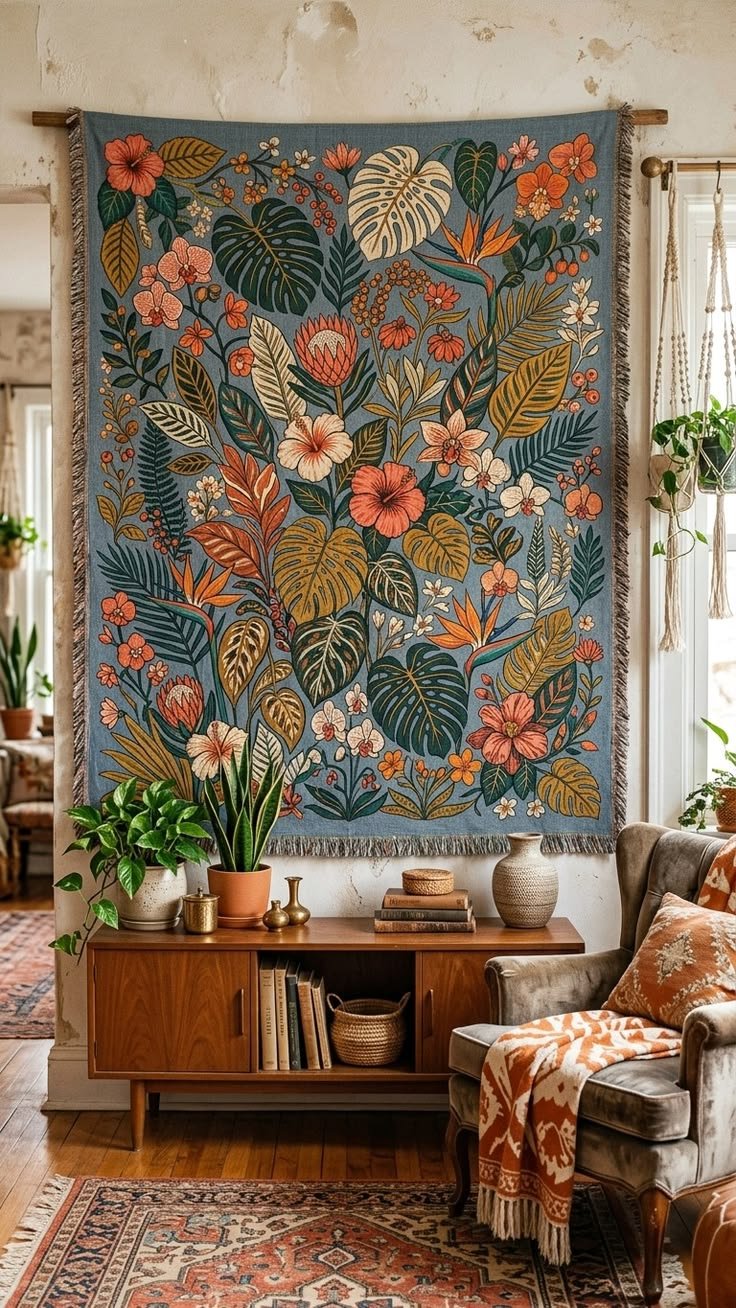
A tapestry wall hanging is commonly called a wall tapestry, woven tapestry, or textile wall hanging, depending on its construction and decorative style. Traditionally, a tapestry is a woven textile in which coloured weft yarns are interlaced with warp threads to create decorative patterns or pictures. Unlike macrame, which uses knots, traditional tapestry designs are formed directly through weaving. Modern home decor retailers also use the term wall tapestry for printed fabric hangings, embroidered textiles, and other decorative fabric panels. However, these are not necessarily traditional woven tapestries.
What Is the Best Way to Hang a Tapestry?
The best way to hang a tapestry is to use a curtain rod or wooden dowel through a sewn rod pocket, allowing the fabric’s weight to be distributed evenly. This method helps the tapestry hang smoothly without stretching individual sections. For lightweight modern fabric tapestries, you can also use suitable wall clips or removable hanging systems, provided they are compatible with the fabric and wall surface. However, heavy, handmade, or valuable woven tapestries need stronger support. Avoid attaching them directly to the wall with pins or nails, as this can damage the fibres over time.
What Are the Differences Between Macrame and Tapestry Wall Hangings?
| Feature | Macrame Wall Hanging | Tapestry Wall Hanging |
|---|---|---|
| Construction | Made by knotting cords | Traditionally made by weaving threads |
| Common Materials | Cotton cord, jute, linen, polyester | Wool, cotton, silk, linen, synthetic fabrics |
| Main Technique | Decorative knotting | Traditional weaving or modern fabric printing |
| Texture | Raised, knotted, and three-dimensional | Generally flatter woven or printed surface |
| Appearance | Open patterns, visible knots, and hanging fringes | Continuous fabric with decorative artwork |
| Common Patterns | Diamonds, chevrons, knots, geometric shapes | Floral, geometric, abstract, pictorial designs |
| Colour Options | Often neutral, but colourful designs are available | Available in neutral, vibrant, and multicoloured designs |
| Thickness | Depends on cord thickness and knot density | Depends on fabric and weaving technique |
| Weight | Varies with cord material, size, and density | Varies with fabric, size, and construction |
| Hanging Methods | Wooden dowels, rods, rings, or cords | Curtain rods, dowels, rod pockets, or suitable clips |
| Maintenance | Gentle dusting and fibre-specific spot cleaning | Depends on fabric, dyes, and construction |
| Common Interior Styles | Bohemian, rustic, minimalist, Scandinavian | Traditional, bohemian, contemporary, eclectic |
| Best Uses | Adding texture above sofas, beds, and accent furniture | Displaying artwork on feature walls and larger surfaces |
| Overall Effect | Soft, dimensional, and textured | Artistic, fabric-based, and often more detailed |
What Are the Different Types of Tapestry Wall Hangings?
Tapestry wall hangings are available in several styles, ranging from traditional woven artwork to modern printed fabric designs. The most common types include:
- Traditional Woven Tapestries: Created on a loom using coloured yarns to form patterns directly within the fabric. These often feature detailed artwork, traditional motifs, and decorative scenes.
- Jacquard Woven Tapestries: Produced using jacquard weaving techniques that allow intricate patterns and multicoloured designs. These textiles can feature floral arrangements, landscapes, and geometric artwork.
- Printed Fabric Tapestries: Made from fabrics such as cotton or polyester with designs printed onto the surface. They are popular for displaying colourful artwork, mandalas, abstract prints, and contemporary patterns, although they are not traditional woven tapestries.
- Embroidered Textile Wall Hangings: Feature decorative stitching applied to a fabric base. While not technically tapestries in the traditional weaving sense, they are often grouped with tapestry-style wall decor.
- Modern Geometric Tapestries: Incorporate abstract shapes, repeated patterns, and contrasting colours. These designs can be woven or printed, depending on the product.
Macrame can also decorate windows and doorways. For example, Boho macrame curtains can be hung across suitable openings to add texture and a relaxed bohemian touch.
Wrap Up
Macrame and tapestry wall hangings both bring character to your walls, but their construction and appearance make them distinct. Macrame uses knotted cords to create textured, dimensional designs, while traditional tapestries feature woven patterns and a flatter fabric surface. Whether you prefer the natural texture of macrame or the detailed artwork of a tapestry, consider your room’s style, available wall space, and maintenance needs before choosing.
At Boheme Decoration, we offer decorative pieces to help you create a warm and inviting home. Explore our collections of boho wall decor, macrame hangings, floating shelves, throw pillows, rugs, and other bohemian accessories to add personality to your living spaces.