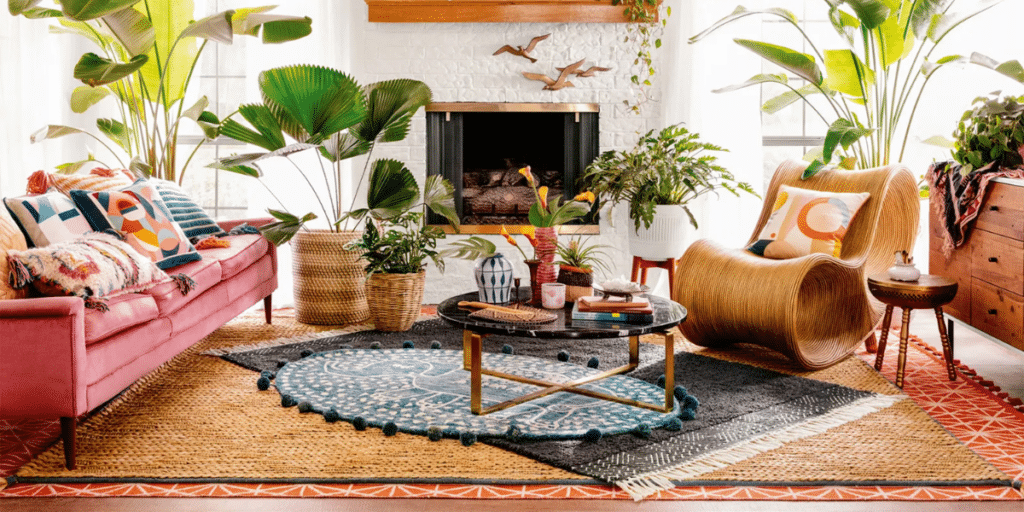
Choosing the right boho rug material matters just as much as choosing the pattern, colour, or size because the material affects both the appearance and everyday performance of the rug. It determines how soft the rug feels underfoot, how well it handles regular foot traffic, how easy it is to clean, and which rooms it suits best. Wool is one of the strongest all-round choices because it combines softness, warmth, durability, and a rich textured look that fits naturally into bohemian interiors. Jute is excellent for adding earthy texture, cotton creates a lighter and more casual feel, while synthetic fibres are often easier to maintain. Understanding these differences makes it easier to choose a boho rug that works well with your space and lifestyle.
What Are the Materials Used to Make Boho Rugs?


Boho rugs are made from a wide range of natural and synthetic fibres, each with its own texture, appearance, and practical qualities.
- Wool: Wool is one of the most popular materials for boho rugs because it feels soft, offers good durability, and works well in spaces where comfort matters. It also holds colour well, which makes it suitable for patterned and richly detailed designs.
- Jute: Jute gives boho rugs a natural, earthy texture and a relaxed appearance. Its woven surface works especially well in neutral, rustic, coastal, and organic interiors.
- Cotton: Cotton rugs are generally lighter and more flexible than wool or jute. They often suit casual rooms, bedrooms, and smaller spaces where a softer, less structured rug is preferred.
- Synthetic Fibres: Materials such as polypropylene and polyester are commonly used in rugs because they are practical, affordable, and often easier to maintain than some natural fibres.
- Wool and Jute Blends: Combining wool with jute can balance softness and texture. Wool adds comfort, while jute gives the rug a more natural, structured appearance.
- Cotton Blends: Cotton may also be combined with other fibres to improve durability or help the rug maintain its shape.
The right material depends on whether you value softness, durability, easy maintenance, natural texture, or a combination of these qualities.
Which Boho Rug Material Is the Most Durable?
Wool is generally one of the most durable natural materials for a boho rug, particularly when the rug is well constructed and cared for properly. Wool fibres have natural resilience, which helps them recover from regular foot traffic and maintain their appearance over time.
Jute is also durable, but it performs differently. Its strong natural fibres make it suitable for many everyday spaces, although the textured weave may become worn faster in areas exposed to heavy friction or moisture. Synthetic rugs can also offer strong durability, particularly in busy households. They are often designed to resist everyday wear, staining, and fading, which makes them practical for areas that receive frequent use. Durability also depends on construction. A tightly woven rug will generally handle regular use better than a loosely woven design, regardless of the fibre used.
Is Wool or Jute Better for a Boho Rug?
Whether wool or jute is better depends on what you want from the rug. Wool is the better option for softness, warmth, and comfort. It works particularly well in living rooms and bedrooms, where you may spend more time walking barefoot or sitting close to the floor. Wool also tends to feel more substantial and cushioned underfoot. Jute is better if you prefer a natural, textured appearance. Its earthy fibres add visual depth without overpowering the rest of the room, making it an excellent choice for relaxed boho interiors. Wool generally performs better where softness and long-term comfort are priorities, while jute is ideal when you want a more rustic, organic texture. A wool-jute blend can offer a balance between the two.
Which Boho Rug Material Is Best for High-Traffic Areas?


For high-traffic areas, wool and durable synthetic fibres are usually the most practical choices. They can handle repeated foot traffic better than more delicate materials when properly maintained. Wool works well because its fibres are naturally resilient and can recover from compression. This makes it suitable for busy living rooms, hallways, and family spaces.
Synthetic fibres can also perform well in high-traffic areas because many are designed to resist staining, fading, and everyday wear. They can be particularly useful in homes where easy cleaning is a priority.
Jute may work in moderately busy spaces, but it is better suited to dry environments where it will not be exposed to frequent spills or moisture. Cotton rugs are often lighter and may show wear sooner in heavily used areas.
What Is the Best Boho Rug Material for a Living Room?
For a living room, jute is one of the best boho rug materials because it brings natural texture, warmth, and an organic look that works especially well with bohemian interiors. Its woven surface pairs easily with wooden furniture, neutral sofas, woven baskets, plants, and layered textiles, helping the room feel relaxed without becoming visually heavy.
Jute also works well in living rooms because it adds definition beneath a seating area while keeping the overall look casual and grounded. A design such as the Scalloped stripe boho rug can add extra visual interest through pattern and shape while still maintaining the natural, textured character that works so well in boho spaces. If your living room is used heavily every day, choose a tightly woven jute rug and keep it away from frequent moisture or spills. For homes where softness underfoot is the main priority, wool may still be the better option, but for a natural boho living room look, jute is an excellent choice.
What Boho Rug Material Is Easiest to Clean?


Synthetic boho rugs are generally the easiest to clean, particularly when compared with wool, jute, or other natural fibres. Materials such as polypropylene and polyester often resist stains and moisture better, making them practical for households that want lower-maintenance flooring. Cotton rugs can also be relatively easy to care for, depending on their construction and washing instructions. Some lightweight cotton rugs may be suitable for more frequent cleaning than heavier natural-fibre designs.
Wool requires more careful maintenance. Regular vacuuming and quick attention to spills usually work well, but deep cleaning may need gentler methods. Jute requires the most caution around moisture. Because it is a highly absorbent natural fibre, excessive water can lead to staining, discolouration, or changes in shape. It is generally better to vacuum jute rugs regularly and spot-clean only when necessary.
Which Rug Material Is Best for Homes With Kids or Pets?
For homes with kids or pets, durable synthetic fibres and wool are usually the most practical choices. Synthetic rugs can be useful because they are often easier to clean and more resistant to everyday spills and stains. This makes them a practical option in family rooms, play areas, and other spaces where accidents are more likely. Wool is also a strong choice because it is durable, comfortable, and naturally resilient. It can handle regular activity while still providing a softer surface for children to sit or play on. Jute may be less suitable in homes where frequent spills, wet paws, or pet accidents are common. Its absorbent fibres can hold moisture and may be harder to clean thoroughly. Cotton can work in lower-traffic spaces, particularly if the rug is lightweight and easy to maintain. However, it may not offer the same durability as wool or some synthetic fibres.
Which Boho Rug Materials Should You Avoid in Damp Areas?
Jute and other highly absorbent natural fibres are generally best avoided in damp areas. Moisture can become trapped in the fibres, which may lead to staining, odours, mildew, or changes in texture and shape. For this reason, jute rugs are usually better suited to dry spaces such as living rooms, bedrooms, dining rooms, and home offices rather than bathrooms, wet entryways, or areas where water is frequently present. Wool should also be protected from persistent moisture. Although it performs well in many indoor spaces, repeated dampness can affect the fibres and increase the risk of odour or mildew. Synthetic materials are often more practical in rooms where occasional moisture is unavoidable because they generally absorb less water and dry more easily. Even then, the rug should not be left wet for long periods.
Wrap Up
The best material for a boho rug depends on how you want the rug to feel, where it will be placed, and how much maintenance you are comfortable with. Wool is an excellent all-round choice for softness and durability, jute brings natural texture, cotton offers a lighter and more casual feel, and synthetic fibres provide easier everyday maintenance. Think about foot traffic, moisture, pets, children, and the overall atmosphere you want to create before choosing. Explore our collection of boho rugs, along with boho furniture, pillows, bedding, and wall décor, to bring texture, warmth, and relaxed bohemian character into every part of your home.